
Why Your Tire Pressure Light Comes On on Cold Sacramento Mornings (and What to Do)
Cold Sacramento mornings drop tire pressure about 1 psi per 10°F. What your TPMS light means and where to get it checked in Natomas, Arden or Roseville.

Why does my tire pressure light come on when it's cold?
Short answer: cold air shrinks. Tire pressure drops about 1 psi for every 10°F the air cools, and an average October day in Sacramento runs about 28 degrees warmer than the night that follows. A tire that was a little low at 3 p.m. can slip under the warning line by sunrise. Check all four with a gauge before driving.
Most of the time, that's all it is. Sometimes it's a nail. Here's how to tell the difference and what to do about it. If you'd rather hand it off, bring it to Quality Tune-Up Northgate. We're at 2501 Northgate Blvd at West El Camino Ave, Sacramento, CA 95833 (916-929-7172). That's close to both I-5 and I-80 for South Natomas and North Natomas commuters.
How much does tire pressure drop on a cold morning?
About 1 psi for every 10°F. That's the rule of thumb Bridgestone gives drivers. Your car isn't being dramatic. The air in the tires really did shrink overnight.
Here's what that looks like in Sacramento. NOAA's 1991–2020 climate normals for Sacramento Executive Airport give these average highs and lows:
- October: high 78.8°F, low 50.3°F. That's a 28-degree swing, or close to 3 psi between the afternoon and dawn.
- November: high 65.0°F, low 42.7°F. The average low is about 8 degrees colder than October's, so plan on close to 1 more psi gone.
- December: high 56.0°F, low 38.5°F. Your coldest starts of the year.
Then add the slow loss every tire has. Bridgestone says tires lose about 1 psi a month on their own. Skip a few months of checks, add the first cold snap, and the light comes on. Cars parked outside overnight, in a Natomas apartment lot or on the street in Arden-Arcade, feel the full drop. A garage helps.

Steady, on-and-off or flashing: what is the TPMS light telling you?
A steady light means at least one tire is low. A light that flashes at startup and then stays on means the monitoring system itself has a problem.
TPMS stands for tire pressure monitoring system. NHTSA requires it on every passenger car, light truck and van from model year 2008 on. The warning light is either a tire cross-section with an exclamation point inside or a top view of a car showing all four tires.
- On when you start the car, off after a few miles: the tires were just under the line. Driving warms them, the pressure comes back up, and the light shuts off. They are still low. Add air.
- On and stays on: at least one tire is significantly underinflated, in NHTSA's words. Check all four as soon as you can.
- Flashes for 60 to 90 seconds, then stays on: the system has a fault. It will repeat every time you start the car until it's fixed. NHTSA says to have the system inspected by your dealer.

What psi should my tires be? Check the door jamb, not the sidewall
The right number is on the Tire and Loading Information label on the driver's door jamb, or in your owner's manual. The number molded into the tire sidewall is the most that tire can hold. It is not what your car needs.
Some cars call for a different pressure front and rear. The label will show both. If you have a spare, it's on there too.
How do I check and fill my tires the right way?
Check them cold, before you drive, with a gauge. NHTSA counts a tire as cold when the car hasn't been driven for at least three hours.
- Check first thing in the morning, before the commute.
- Find your number on the driver's door jamb label.
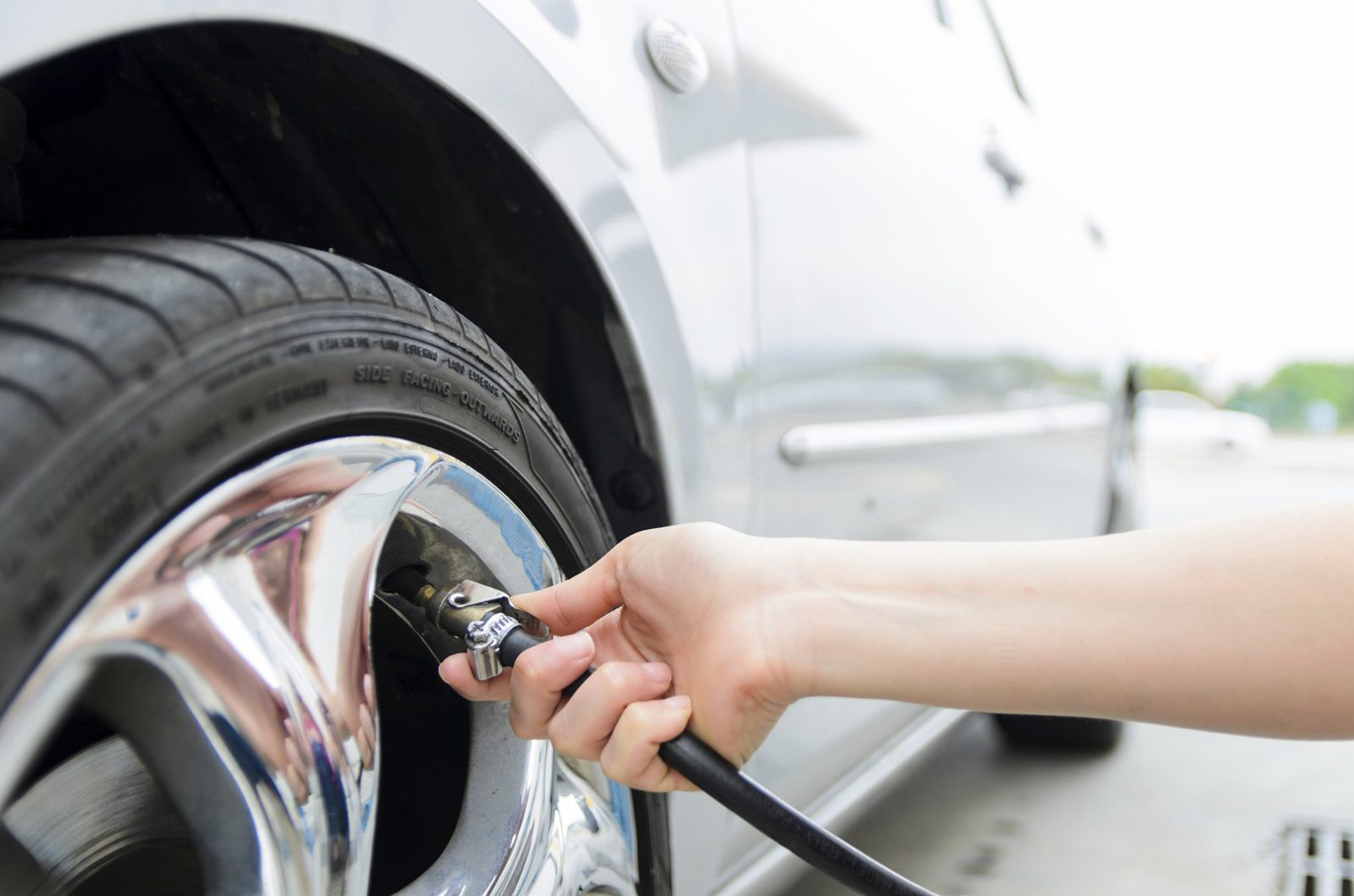
- Take the cap off the valve stem. Press the gauge on straight and firm. If it hisses, it isn't seated.
- Write down each reading, spare included.
- Subtract each reading from the door-jamb number. That's how much air each tire needs.
- Add air in short bursts and recheck with the gauge after each one.
- Overshot it? Press the pin in the valve gently with the edge of the gauge to let a little out.
- Put the valve caps back on.
Driving to the air pump warms the tires, so your readings there will run a bit high. NHTSA's advice: fill to the door-jamb number anyway, then recheck when the tires are cold. Slightly low is safer than way low.
When does the light mean a slow leak, a nail or a bad sensor?
When one tire keeps coming up low and the others don't, or the light won't go off after all four are filled.
- Same tire low again a few days later: that's a leak, not the weather. Bridgestone lists a puncture, a leaking valve or other damage as common causes. If a tire loses more than 2 psi a month, it says to have a tire professional look at it.
- All four at the right number and the light is still on: recheck with a different gauge first. If the light flashes at startup, it's a system fault, not the air.
- A tire that looks flat, or a bulge or cut in the sidewall: don't drive on it. Put the spare on or call for a tow.
For a puncture, a tire shop can tell you whether it can be patched. For a flashing light, follow NHTSA's advice and have the system inspected.
Where can I get my tire pressure checked in Natomas, Arden-Arcade or Roseville?
Stop by any Quality Tune-Up and our team will check your tire pressure and show you the right number for your car. The easy time to do it is while your car is in for an oil change.
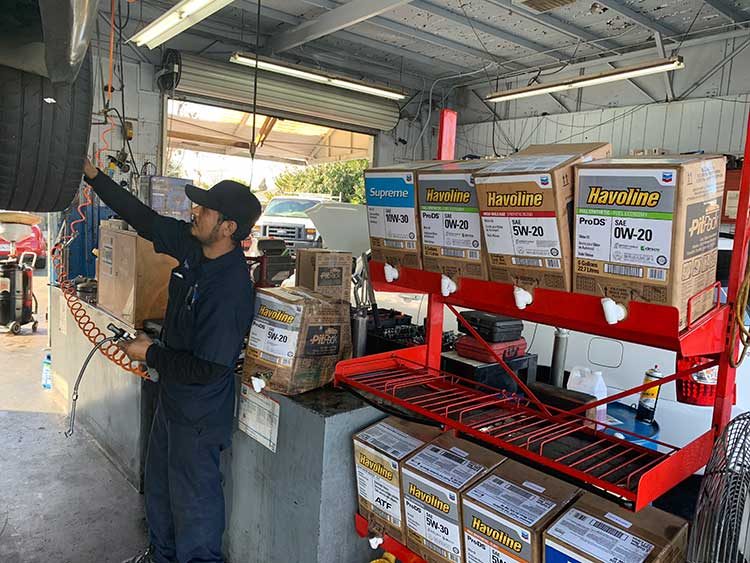
- Northgate: 2501 Northgate Blvd at West El Camino Ave, Sacramento, CA 95833, (916) 929-7172. Close for South Natomas, North Natomas, Gardenland and Woodlake, between I-5 and I-80. Our Northgate Blvd shop | Northgate oil change coupon
- Arden Way: 2545 Arden Way at Fulton Ave, Sacramento, CA 95825, (916) 487-6075. Handy for Arden-Arcade, Arden Park, Sierra Oaks and Campus Commons, just off Business 80. Our Arden Way shop | Arden oil change coupon
- Roseville: 1700 Douglas Blvd, 1/4 mile east of I-80, Roseville, CA 95661, (916) 783-8862. Serves Roseville, Granite Bay, Rocklin and Citrus Heights. Our Roseville shop on Douglas Blvd | Roseville oil change coupon
All three are open Monday through Friday 8 to 6 and Saturday 8 to 5. Closed Sunday.
Low tires also change how your car reacts when you brake. See our brake maintenance page and our preventive maintenance page for what else we look at. For tread depth and the penny test, read our posts on checking tire pressure before the seasons change and winter weather tire care.
Get your tire pressure checked at Quality Tune-Up Northgate (2501 Northgate Blvd, Sacramento, CA 95833, 916-929-7172) during your next oil change. Look for the Chevron Havoline Supreme, High Mileage and Havoline PRO DS Full Synthetic oil change coupons on our coupons page. Open Mon–Fri 8–6, Sat 8–5.
Common questions
Is it safe to drive with the tire pressure light on?
Drive gently to the nearest air pump and check all four. NHTSA says to check the pressure as soon as possible. If a tire looks flat, or the car pulls or shakes, pull over and use the spare.
Why does my TPMS light go off after I drive a few miles?
Driving warms the tires and the pressure rises back above the warning line. NHTSA says that on-and-off pattern on cold mornings usually means the tires are a little low. Add air before the next cold morning.
Should I inflate tires to the number on the sidewall?
No. The sidewall number is the tire's maximum. Use the number on the driver's door jamb label or in your owner's manual.
How often should I check tire pressure in fall and winter?
At least once a month, which is what NHTSA and Bridgestone both recommend. In fall and winter, also check after the first cold snap and before any long trip up I-80 or down I-5.
Sources, accessed October 15, 2026: NHTSA, "Tires" (nhtsa.gov/equipment/tires). Bridgestone Americas, "Tire Inflation" (bridgestoneamericas.com) and Bridgestone's Tire Maintenance, Safety and Warranty Manual. NOAA National Centers for Environmental Information, 1991–2020 monthly climate normals for Sacramento Executive Airport. Shop addresses, hours and coupons from myqualitytuneup.com.
Complete Car Care & Maintenance Tips
Why Your Tire Pressure Light Comes On on Cold Sacramento Mornings (and What to Do)
Cold Sacramento mornings drop tire pressure about 1 psi per 10°F. What your TPMS light means and where to get it checked in Natomas, Arden or Roseville.
Do I Need a Smog Check in Sacramento? 2026 Rules by Model Year
Sacramento smog check rules for 2026 by model year, what to know when selling or buying, what STAR notices mean, and four Quality Tune-Up shops near you.

What to know for Cold Weather Driving in 2025
Here are some helpful tips to get you to your holiday destinations and winter activities in 2025. Read more about ways to protect you and your family in winter driving conditions.
Locate exclusive offers for a shop near you.
Proudly Pouring Chevron Lubricants

