

Rats in Your Engine? Why Sacramento Drivers Find Chewed Wires in Fall and Winter
Chewed wires or a new dash light after your car sat? Why rodents move into Sacramento engine bays in fall, plus help in Fruitridge, Florin and Arden.
Why are rats chewing car wires in Sacramento this fall?
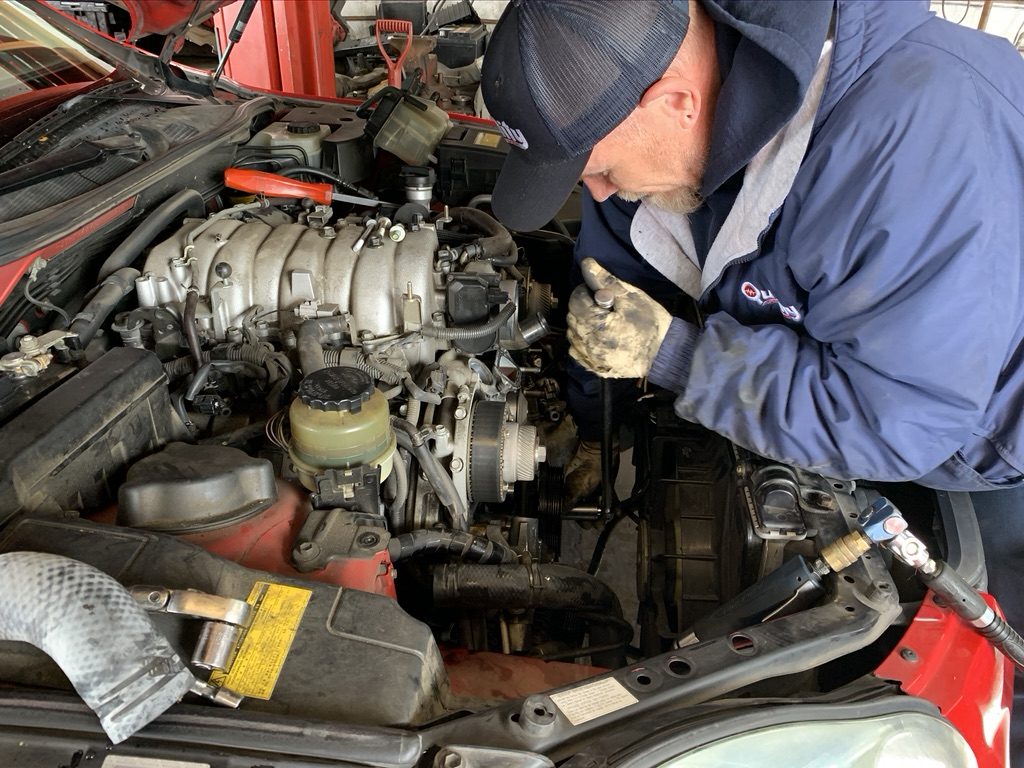
Short answer: rats and mice chew car wiring because an engine bay is warm, dark and close to food, and fall is when they start looking for shelter. Watch for new warning lights, nest debris and droppings under the hood. Quality Tune-Up Fruitridge, at 3846 Fruitridge Rd, can trace and repair chewed wires.
Once the nights cool off, a parked car looks a lot like a nice place to stay. The engine stays warm for hours after you shut it off. There are gaps all around it, and nobody bothers a rodent in there overnight.
UC Integrated Pest Management, the University of California's pest program, says house mice often move into homes in autumn when nighttime temperatures drop. Your garage and driveway are right next door. If you live near big trees, ivy or the river, you're in prime roof rat country.
Where do Sacramento rodents come from?
Mostly from the yard and the block around it. UC IPM says roof rats live and nest above ground in shrubs, trees and dense plants like ivy. Neighborhoods with mature landscaping are good habitat, and so is brush along rivers and creeks.
That describes a lot of Sacramento. Think of the old trees in Curtis Park and Land Park, the older yards in Oak Park and Tahoe Park, and the levee side of the Pocket. Norway rats are the other common one. They dig burrows along foundations, under woodpiles and around gardens.
Food keeps them coming back. UC IPM points to fallen fruit and nuts, pet food left outside and open garbage. A bag of birdseed or dog food in the garage is an open invitation.

What are the warning signs of rodents in your car?
The first sign is often a dash light that wasn't there yesterday. Rodents chew whatever is in reach, so the symptom depends on which wire they hit.
- Check engine, ABS or airbag light comes on after the car sat. Often a chewed sensor wire or connector.
- Engine cranks but won't start, or runs rough. Possible damage to ignition, fuel or sensor wiring.
- Leaves, shredded paper, insulation or nut shells on the engine. A nest, usually on top of the engine or near the battery.
- Small droppings on the engine cover or under the hood. Rodents are visiting, even if nothing is chewed yet.
- Musty or musky smell from the vents. Possibly nest material in the cabin air intake or filter.
- Burning smell after a short drive. Possibly nest debris sitting on a hot engine or exhaust part.
- Coolant puddle or low washer fluid. Possibly a chewed hose or reservoir line.
UC IPM says mice leave a musky odor and nests of finely shredded material. Gnaw marks and droppings are the giveaway for both rats and mice.
A burning smell is worth taking seriously. Our post on smelling something odd while driving covers other causes. If a nest is on the exhaust, pull it off before it gets worse. Wear gloves when you do it. UC IPM warns against touching rodents bare-handed, since they can carry disease.
Why do rodents chew newer car wiring?
Rodent teeth never stop growing, so they gnaw on just about anything. UC IPM notes Norway rats can chew plastic, wood and even soft metals like copper and lead. Wire insulation is easy work by comparison.
You may have read that newer cars use soy-based wire coatings that attract rodents. We haven't found solid proof of that, so we won't tell you it's true. Rats were chewing wires long before anyone made a soy coating.
What we can tell you is that carmakers know about the problem. A 2022 Honda service bulletin, posted by NHTSA, tells technicians to wrap repaired harnesses with rodent deterrent tape. Honda says the tape contains capsaicin, the compound that makes chili peppers hot.
How do you keep rats and mice out of your engine?
No single trick does it. What works is making your car and your yard less attractive than the neighbor's.
- Drive it. A car that sits for a week or two gives a rodent time to move in. If you have two cars, rotate them.
- Move the food. Bring pet food in at night. Store birdseed and dog food in metal or heavy plastic bins with tight lids.
- Clean up the yard. Pick up fallen fruit and nuts. UC IPM suggests trimming tree limbs at least 3 feet back from the roof and keeping 2 feet between shrubs.
- Park away from ivy and hedges. If you can, don't park nose-first into dense plants.
- Seal the garage. UC IPM says to close any opening larger than 1/4 inch, since mice can squeeze through gaps that small.
- Pop the hood once a week. Look on top of the engine, around the battery and near the windshield cowl. Fresh droppings or nest material mean it's time to act.
- Cover a car that sits. UC IPM recommends a weighted car cover that touches the ground and seals all the way around.
- Trap, don't poison, around the car. UC IPM recommends snap traps for most situations. Set them where kids and pets can't reach.
What about peppermint oil or plug-in ultrasonic gadgets? UC IPM is blunt about it. Rats get used to repeated sounds, and odors only bother them for a very short time. The program says there are no truly effective rat repellents registered for use in California.
Don't forget the cabin air filter. Rodents like to nest in the air intake under the windshield. Our air filter page explains what that filter does, and we check it any time your car is in for service.
What does a rodent wiring repair involve?
It starts with finding every bad spot, not just the first one. Rodents rarely chew a single wire and leave.
A technician will scan for trouble codes, then trace the harness by hand and by eye. Some damage is easy to see. Some is a pinhole in the insulation that only shows up with a meter or a wiggle test.
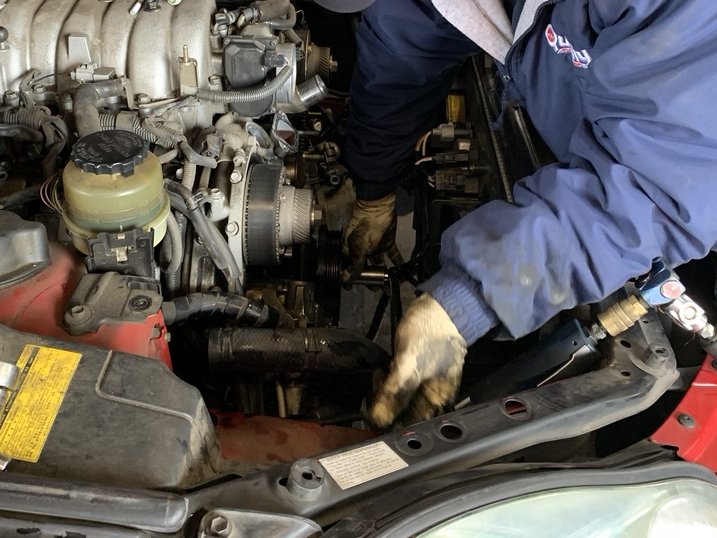
Small damage can often be spliced and sealed. A badly chewed section, or a harness with many cut wires, may need to be replaced. Hoses and belts get checked too, since rodents chew those as well.
That's why a real diagnosis matters before anyone starts cutting. Our full service repair page covers the computer diagnostics we run. If the A/C or heater smells bad afterward, our A/C maintenance service includes a check of the belt, hoses and visible leaks.
One more California wrinkle. A lit check engine light means the car won't pass a smog check. Get the wiring fixed and the light cleared before your smog is due.
Does car insurance cover rodent damage?
Often, yes, if you carry comprehensive coverage. Liability-only policies don't pay for damage to your own car.
The California Department of Insurance describes comprehensive as coverage for damage caused by something other than a collision. It also says comprehensive does not cover mechanical breakdown, normal wear and tear or maintenance. GEICO's guide says rodent damage is usually treated as non-collision damage.

Every policy is different, and your deductible still applies. Call your insurer before the repair starts. Here's what helps your claim:
- Take photos of the nest, droppings and chewed wires before anything gets cleaned up.
- Keep the chewed pieces if the shop replaces them.
- Ask for a written diagnosis that says the damage was caused by rodents.
- Write down the date you first noticed the warning light or the symptom.
Where can you get chewed wires checked near Oak Park, Meadowview or Arden-Arcade?
Any of our six shops can take a look. Three are close to the neighborhoods with the big trees and old yards this post is about.
Quality Tune-Up Fruitridge is at 3846 Fruitridge Rd, Sacramento, CA 95820, (916) 392-1917, just east of Hwy 99 near MLK Jr Blvd. It's close to Oak Park, Tahoe Park, Curtis Park, Fruitridge Manor, Colonial Heights and Elmhurst.
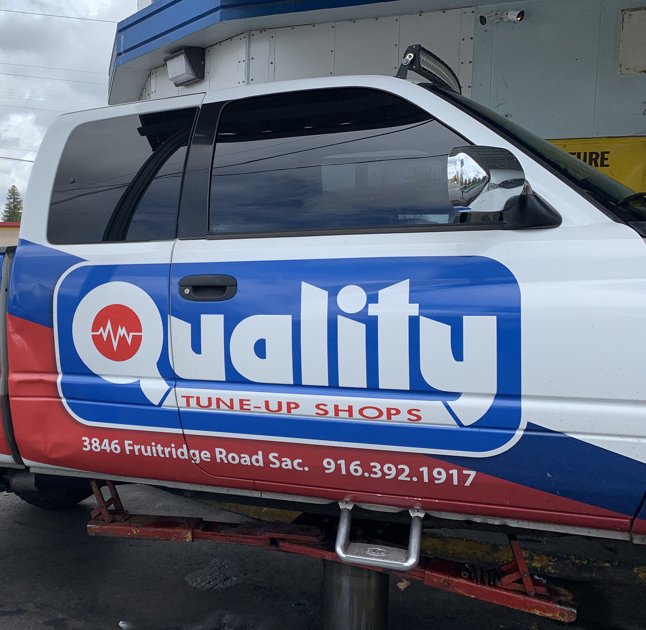
Quality Tune-Up Florin is at 2221 Florin Rd, Sacramento, CA 95822, (916) 424-1450, near 24th St. It serves Meadowview, Parkway, Golf Course Terrace, the Pocket, Greenhaven and Valley Hi, with quick access from I-5, Freeport Blvd and Hwy 99.
Quality Tune-Up Arden Way is at 2545 Arden Way at Fulton Ave, Sacramento, CA 95825, (916) 487-6075. It's handy for Arden-Arcade, Arden Park, Sierra Oaks and Carmichael.
All three are open Monday through Friday 8 to 6 and Saturday 8 to 5. Closed Sunday. If you're due for regular service anyway, our post on what a tune-up includes in 2026 explains what we look at.
Seeing a new warning light after your car sat? Book a diagnostic at Quality Tune-Up Fruitridge (3846 Fruitridge Rd, Sacramento, CA 95820, 916-392-1917) or Quality Tune-Up Florin (2221 Florin Rd, Sacramento, CA 95822, 916-424-1450). Arden-Arcade drivers can visit Quality Tune-Up Arden Way (2545 Arden Way, Sacramento, CA 95825, 916-487-6075). See this month's offers on our coupons page. Open Mon–Fri 8–6, Sat 8–5.
Common questions
Can rats damage my car engine?
Yes. UC IPM says rats commonly gnaw on engine wire insulation, which can cause serious malfunctions. They also chew hoses and build nests on top of the engine. Most of the damage is to wiring and rubber, not the engine itself.
What are the signs of mice in my car?
Look for droppings, shredded nest material and gnaw marks under the hood or in the trunk. A musky smell from the vents is another clue. New warning lights after the car sat for a few days often point to chewed wiring.
Does car insurance cover rodent damage?
Usually, if you have comprehensive coverage. Comprehensive covers damage from things other than a collision, minus your deductible. Liability-only policies won't pay for it. Check your own policy and call your insurer before repairs start.
What smell keeps rodents out of cars?
None reliably. UC IPM says rats avoid some odors at first, but no repellent has solved a rat problem for more than a very short time. Removing food, parking away from dense plants and checking under the hood do more good.
Sources, accessed October 27, 2026: University of California Statewide Integrated Pest Management Program, Pest Notes: Rats (updated June 2025) and Pest Notes: House Mouse (updated July 2025). American Honda Motor Co., ServiceNews A22090A, Clarity FCV Sub Tank Harness Rodent Damage (September 2022), via NHTSA. California Department of Insurance, Auto Insurance 101. GEICO, Does Car Insurance Cover Rodent Damage? Shop addresses, hours and services from myqualitytuneup.com. Last updated October 27, 2026.
Complete Car Care & Maintenance Tips
Rats in Your Engine? Why Sacramento Drivers Find Chewed Wires in Fall and Winter
Chewed wires or a new dash light after your car sat? Why rodents move into Sacramento engine bays in fall, plus help in Fruitridge, Florin and Arden.
Darker Commutes After Daylight Saving Time Ends: A 10-Minute Headlight, Wiper and Visibility Check
Sacramento sunset drops to 5:05 pm when DST ends Nov 1. A 10-minute headlight and wiper check, California headlight law, and shops in Arden and Natomas.

What Is a Tune-Up in 2026? What's Included and Do Modern Cars Still Need One?
A modern tune-up means new spark plugs and an ignition check, not a carb adjustment. What it includes, how often, and where to get one in Sacramento.
Locate exclusive offers for a shop near you.
Proudly Pouring Chevron Lubricants

